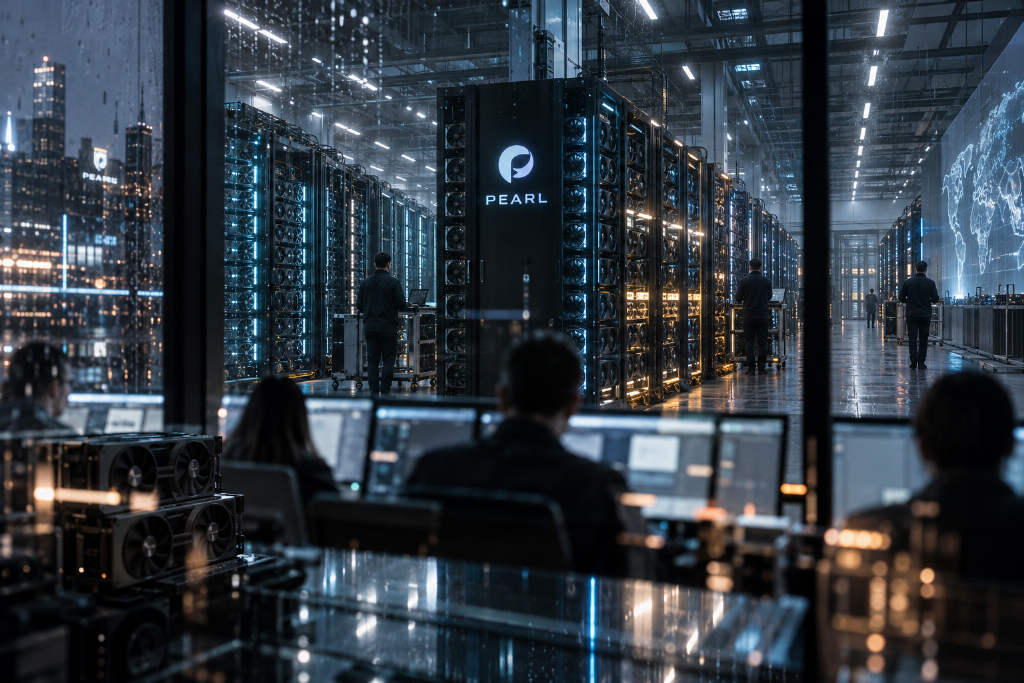
Pearl2026-10-12 01:01:02Pearl’s 320,000-GPU network is being framed as a live market for AI compute pricingA market for GPU compute worth hundreds of billions of dollars still lacks a pricing benchmark that reflects what large buyers actually pay. In an analysis published by TechFlowPost and attributed to Decentralisedco, Pearl, a Layer 1 blockchain built around proof-of-work, is presented as an alternative way to discover the price of AI compute through real-time market behavior rather than posted cloud rate cards. The article argues that public GPU indexes from Silicon Data, Ornn, and Compute Desk struggle to price H100 rentals because the same chip can represent very different products depending on networking, uptime guarantees, cooling, and facility quality. It also notes that CME’s planned GPU futures, set for Oct. 5, 2026, use cash settlement against a Silicon Data survey index based on public list prices, even though large buyers often negotiate discounts of 40% to 50%. Pearl’s model replaces SHA-256 hashing with matrix multiplication on GPUs and uses a mechanism called NoisyGEMM to keep miners from shortcutting the work. According to the piece, the network measures how much useful matrix computation GPUs complete every 194 seconds under real operating conditions. With 320,000 GPUs participating across multiple regions, the resulting hashrate is described as a continuously updated signal of the opportunity cost of compute, shaped by whether operators choose to mine Pearl or rent capacity to paying AI customers.80
Meta2026-08-11 11:57:17Zuckerberg’s open letter lays out Meta’s AI play: free access, partly open models, and auction-priced computeMeta is shifting how it wants to compete in AI, according to a roughly 6,500-word open letter from Mark Zuckerberg titled The Future is for Everyone. The core pitch is that superintelligence should not sit in the hands of a small number of companies and institutions, but become a tool available to ordinary users. In practice, that means Meta plans to offer a free baseline AI product to billions of people, bring back some open-weight releases, and charge for heavier usage through a dynamic bidding system for additional compute. The article argues that this is more than a product message. It is also a competitive repositioning. If the contest is defined only by who has the strongest frontier model, Meta does not appear to hold a clear edge. But the company still controls major consumer distribution through Facebook, Instagram, WhatsApp, and a newer hardware entry point in AI glasses. On that view, Meta can afford to give ground at the model layer if it retains the user relationship and the right to price scarce compute. The write-up also points to Meta’s release of the 30-billion-parameter Muse Glimmer, its plan to open the weights for Muse Spark 1.2, and a $1 billion Future is for Everyone Fund tied to communities hosting data centers.1850